
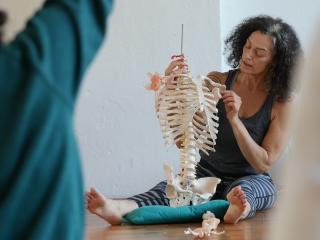
Training in somatic pedagogy 2026/27
KOMPASS funding for strategies to to teach and initiate somatic movement programs
The focus of Somatic Pedagogy is on learning and testing the teaching of somatic movement training and its theoretical embedding. Participants will be able to independently plan and carry out the introduction, main part and conclusion of a somatic movement training course. Participants learn in embodied, experience-based teaching settings.
The special thing about the training is that it works with method synergies. Participants learn to understand overarching principles and to apply observation and development criteria. They learn to train their perception of the methods and are given opportunities for comparison in order to assess what is useful in which application context. Movement development is another cross-method strand. Participants are familiarized with the basics of movement development and learn to understand the interlinking of movement development with learning processes, to incorporate movement development steps into lessons in a targeted manner in order to train coordinative skills and support psycho-physical development processes. This enables participants to learn specific application and teaching strategies that are important for target group orientation in somatic movement training. Embodied mediation also includes the development of an embodied language, which is of great importance in somatic teaching in order to stimulate somatization processes. This is developed in particular through somatic voice work.
In the five modules, the participants gain expertise by deepening their knowledge of somatic methods, teaching together and using different feedback practices. Each module is dedicated to specific topics. The modules build on each other and deepen the content. At the beginning, the proportion of classroom participation is greater and is gradually reduced over the five modules, while the proportion of own teaching practice is gradually increased. With the help of specific feedback methods, participants reflect on their lessons, evaluate and improve their lesson planning and the scope for shaping their lessons.
Curriculum 2026/27
September 14, 2026 - February 12, 2027 - each module Monday - Friday 10am - 5:30pm
| Module 1 | Sep 14 - 18, 2026 | Reflection
|
| Module 2 | Oct 05 - 09, 2026 | Resonance Somatic practice is aligned with the content of the module "Communication" within the Basic Somatic Year. Reflection on the training process: Deepening Reflection of the contents Reflection of the methodology Teaching experience, design and composition Early language & movement development and personality development in relation to contextual resonance, regulatory capacity, and conflict resolution Body systems: Fluids - endocrine system / glands - head - larynx - hands |
| Module 3 | Nov 16 - 20, 2026 | Complexity Somatic practice is aligned with the content of the "Change" module of the Basic Somatic Year: Deepening Reflection of the contents Reflection of the methodology Teaching experience, design and composition Early childhood movement development and personality development in relation to resistance and fear, disorientation, dissonance, availability, and surrender Body systems: Nervous system / Vegetative nervous system / Brain - Lungs - Heart - Circulation |
| Module 4 | Nov 30 - Dec 04, 2026 | Cycles The somatic practice is based on the contents of the module "Initiation" of the Somatic Basic Year. Deepening Reflection of the contents Reflection of the methodology Teaching experience, design and composition Early childhood movement development and personality development in relation to birth and dying, primal trust, devotion, sexuality, love Body systems: embryology - sexual organs |
| Module 5 | Feb 08 - 12, 2027 | Embodiment This module serves the integration of all previous contents and is dedicated to the question of how the learned would like to embody or form on the further personal and/or professional path. Based on the individual process documentation of the previous 9 modules, this module provides a framework for an individual-sovereign continuation and authorship of the contents in the future professional life. Constructive-critical self-reflection and self-assessment are consolidated. The most important aspects of responsibility and ethics of the somatologist are touched upon. Fulfilling all entry requirements (attendance & teaching samples), the final module leads to certification of the ability to communicate the training content to individuals and groups. |
Benefits of the Continuing Education Program in Somatic Pedagogy
Participants deepen their knowledge of these methods through practical experience in teaching sessions and learn how to convey somatic content. In this continuing education program, participants will experience and deepen their understanding of the principles and approaches of the following somatic methods:
- Continuum
- The Feldenkrais Method
- Experiential Breathing according to Prof. Ilse Middendorf
- Body-Mind Centering®
- Experiential Anatomy
- Authentic Movement
- Somatic Yoga
- Somatic Voice
- Improvisation Techniques for Personal Movement and Personal Expression
In these somatic methods, content is experienced through practice. Classes include both anatomical information and theoretical background knowledge, which are explored practically through movement, touch, partner work, and group activities. The practical instructions foster an embodied understanding of the material. The training also leads to a deeper, more nuanced experience of one’s own body. This forms the foundation for embodied teaching in somatic movement training. The somatic, embodied integration of the principles of somatic approaches is the fundamental prerequisite for their further transmission. The interplay of somatic methods in Somatic Pedagogy offers a unique diversity of perspectives for expanding the participants’ existing scope of practice.
Participants are introduced to pedagogical approaches to somatic work and learn how to apply them in their own teaching experiences, with feedback. Through practical experience and building on theoretical foundations, participants learn to develop and plan somatic lessons. To complete the program, they design a teaching sequence consisting of 10 lessons, from which they teach one lesson as a teaching demonstration in the final module.
Upon successful completion, participants receive a certificate (planning a teaching sequence, teaching a somatic class, 10 study sessions, a self-presentation, and a term paper).
Who is this continuing education program in somatic movement education for?
This professional development program is aimed at individuals who wish to teach and apply somatic movement practices, as well as those who wish to integrate somatic work into their professional practice (for example, in the fields of acting, performance, education, social work, teaching, art, psychology, occupational therapy, and body-based therapeutic approaches...).
A prerequisite is a willingness to engage in theoretical reflection within the framework of somatic theory (somatic science) and to apply this theory in practice through specific implementation strategies.
A prerequisite for body- and perception-based somatic methods is a fundamental sense of personal responsibility when working with one’s own body.
To register for this program, please schedule a personal preliminary consultation with the Somatic Academy. >> Schedule an appointment
Ausführliche Seminarinformationen
Seminarleiter*innen
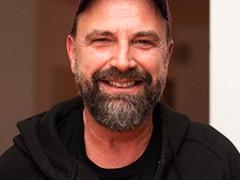
Kai Ehrhardt
ehrhardt@somatische-akademie.de
www.kaiehrhardt.com
Founder of the Somatic Academy Berlin, Breath Therapist/based on the work developed by Prof. Ilse Middendorf, Continuum Teacher and Heilpraktiker (Psychotherapy)
"I had the honor and privilege to learn from the two founders Prof. Ilse Middendorf (Perceptible Breath / Erfahrbarer Atem) and Emilie Conrad (Continuum) and I am pleased to be able to pass on this work." Since 2012, Kai has been developing professional trainings at the Somatic Academy as well as programs dedicated to the application of Somatics in everyday life. He has been a co-curator of the Body IQ festival since 2015. Since 2003, he has developed the approach "Authentic Eros", which integrates - as a somatic application - bodywork, relationship communication and group-dynamic processes in the area of personal and interpersonal development. He is a member of the professional associations Atem, Continuum and ISMETA.
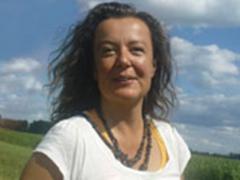
Marion Evers
evers@somatische-akademie.de
Founder of the Somatic Academy Berlin, studied Theatre, French Linguistics & Political Science Cologne, Berlin, Marseille, M.A. "From Actor to Performer "1998, studies in Performance Arts, work in the field of directing/dramaturgy, speaker, moderator. The interest in a stronger integration of theory and practice leads to the foundation of the Somatic Academy, Embodiment Research, Body Phenomenological Foundations, Critical Somatics, Social Body & Body Politics in relation to somatic practices in their social and political relevance of "somatics" today.
Somatic Movement Educator (RSME/ISMETA), Somatic Yoga & Somatic Voice Trainer, Breath Therapist according to Prof. Ilse Middendorf, Yoga Teacher (BDY/EYU)
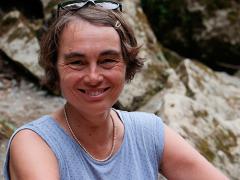
Katja Münker-Harder
www.movement-muenker.de/
Dance | Choreography | Performance | Somatics | Artistic Research | Walking Art | Mountain Hiking Guiding
Continuing education lecturer and director of Environmental Somatics and EMERGE/ Somatic in Dance at the Somatische Akademie Berlin. Member of the German Feldenkrais Association & ISMETA-registered RSME/RSMT/RSDE.
Trained as a physical therapist, Feldenkrais teacher, and mountain hiking guide, as well as in contemporary dance, (contact) improvisation, instant composition.
Conscious and embodied learning, the potential between individual freedom and collective inclusion in the environment, as well as joy, ease, and consciousness in the movement are the focus of her teaching. Her research-oriented practice is informed by deep-sensing investigation and reflecting evaluation. Beyond teaching her work includes performance projects, conference papers, and publications focusing on somatics and choreography, as well as on walking. Regular teaching at universities including FU Berlin, UdK Berlin, and HZT Berlin. Artistic research collaboration with AREAL_artistic research lab Berlin.
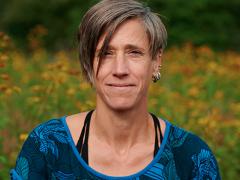
Heike Kuhlmann
MSME, BMC®-Practitioner, dancer, -educator, choreographer, MA Performance Studies/Choreography, Learner of the Discipline of Authentic Movement
Her somatic dance practice focuses on Body-Mind Centering®, Authentic Movement, and Contact Improvisation. In all these methods, Heike is interested in the process of human development. Taking structural conditions into account, Heike aims to support individuals through her work and thereby contribute to creating an environment where people can meet on equal footing. She facilitates somatic processes in individual sessions, courses, workshops, and training programs. Co-founder of the Working Group on Critical Somatics (AKS). Her artistic interests combine dance, activism, and somatics.
More information on: www.heikekuhlmann.net
Kosten
Anmeldeinformationen
BerlinSomatische Akademie Berlin
Paul-Lincke-Ufer 30
10999 Berlin | side building
1st backyard
4th floor
- Full Price: 3200.00 EUR
All instructors are fully certified practitioners in these methods with many years of teaching experience as well as cross-methodological research practice.
This 175-hour continuing education program offers specialization in somatic pedagogy. It will be conducted in English, though some theoretical content will be translated. Participants will receive certification upon mastering strategies for teaching and applying somatic movement practices.
To register for this program, please schedule a personal preliminary consultation with the Somatic Academy. >> Schedule an appointment