
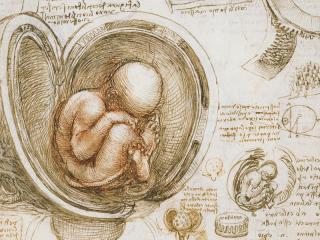
- Embryology
DE+EN | 6-day workshop c.a.r.e
The Origins of Experience
Scientific research increasingly affirms what somatic and therapeutic traditions have long intuited: our earliest experiences — even before birth — leave an imprint. This module is an invitation to re-inhabit that early story — to feel how the body unfolded in time, to witness the intelligence with which we were formed. Through theoretical insight and embodied practice, this module guides us into the somatic memory of our own beginnings. Embryology reveals how the body forms not in isolation, but through a constant dialogue between genetic potential and environmental influence.
It offers new possibilities for healing, for supporting pregnant women, nurturing infants and children, and holding space for the inner child that lives in each of us. When we connect to the wisdom of our embryological origins, we touch a place of original wholeness, of undivided potential.
Before our first breath, conscious memory, or language, we are already in relationship — with gravity, with rhythm, with the pulse of another. In the warm, fluid world of the womb, our bodies begin to write the story of our becoming. This is the place of embryology — not merely a biological process, but the earliest choreography of connection.
Every cell listen, responds, and remembers. Our organs, muscles, and especially our nervous system are shaped by the relational field in our surrounding environment.
Patterns of stress or safety, disconnection or attunement, can be registered in the developing body systems. This imprint becomes the blueprint from which our capacity for attachment, regulation, and resilience emerges. With this focus embryology becomes a relevant topic for caregivers, therapists, educators, and for anyone who has ever been a child. Understanding the embryological journey allows us not only to understand how our tissues, senses, and selves were shaped in relationship from the very beginning but also to repattern this very early shaping.
To know this is not only to understand ourselves more deeply — it is to open a more compassionate, grounded, and attuned way of being with others. This is why we begin here: with the mystery and science of our first unfolding.
Key Topics of the module:
- Early imprints
- Embodied exploration
- Genetic–environment interaction
- Somatic memory
- Pre-birth connection
- Cellular consciousness
- Nervous system development
- Attachment
- Universal relevance
- Embryological development of the organs, muscles, nervoussystem, urogenital system
This workshop is the first module of the professional training c.a.r.e - Creativity, Attachment, Resilience, Education. >> more information
Ausführliche Seminarinformationen
C.A.R.E. – Creativity, Attachment, Resilience, Education
c.a.r.e. stands for Creativity, Attachment, Resilience, and Education. Cultivating care for oneself and others forms a vital foundation for relationships—both with ourselves and those around us.
Our training program equips participants with key insights from neuroscience, pedagogy, psychology, and somatics, focusing on the core of human coexistence: human development. These principles are designed to support professionals in therapeutic, educational, and social fields, while also offering tools for personal growth.
The c.a.r.e. Approach
The c.a.r.e. Program is designed to deepen self-awareness and strengthen personal resilience—essential steps toward fostering supportive relationships with others. Rather than reliving retraumatizing memories, C.A.R.E. helps participants understand how past experiences shape the nervous system and self-perception.
Through targeted work on early childhood reflexes, embryonic development, and self-regulation, the program helps repattern dysfunctional survival strategies while building new resources for stability, flexibility and well-being. C.A.R.E. integrates innovative somatic practices with neuroscientific research, attachment theory, and developmental psychology.
Who Benefits from c.a.r.e.?
This program serves a dual purpose:
- Enhancing professional skills in resource-oriented, attachment-based support.
- Encouraging self-reflection to recognize and transform personal patterns.
By exploring the connections between movement and nonverbal interaction, C.A.R.E. empowers participants to apply these principles in both their personal and professional lives.
200 UE / 6 modules / 4 somatic methods / 3 instructors
This innovative training combines several somatic methods (IBMT; BMC®, INPP, Feldenkrais, Cranio-Sacral Osteopathy, Experiential Anatomy, Authentic Movement) with the latest theory and research on child development. A somatic approach can provide effective and simple support for babies, children and adolescents who are facing challenges in learning, development or emotional regulation, whether big or small. This programme will support you to integrate somatic approaches into your practice, providing a combination of body awareness and embodiment training with practical somatic exercises and approaches appropriate to specific client groups.
Who is this training suitable for?
The training offers a comprehensive professional development programme suitable for those working with babies, children and young people in a range of education and health care contexts. It is relevant to educators, social workers, midwives, doulas, physiotherapists , paediatric nurses, doctors , teachers, psychologists and no medical practitioners in the field of dance, music and theatre provision for children.
Training Goals
- Familiarity with the fundamentals of child development
- The ability to recognise the profound interconnections between the nonverbal and verbal dimensions of consciousness
- A somatic and theoretical understanding of the ongoing development and learning processes
- An understanding of the interpersonal emotional exchange of the development process and how to support it in relationship
- Knowledge of the psycho-physical processes of learning
- An understanding of Brain development
- The ability to recognise different developmental aspects of the different client groups
- The ability to integrate somatic approaches and methods into working with children
- An understanding of the Importance and fundamentals of communication with parents and carers
- Skills to recognise developmental and learning challenges within their client group.
Once qualified you will
- Be able to develop playful-somatic movement programs for different age groups, which support their development.
- Be familiar with"preverbal language” and able to playfully integrate childhood movement development and reflexes in a variety of contexts
- Be able to recognise and understand the presence of persistent primitive reflexes and be able to implement strategies to address this.
- Be able to recognise compensatory behaviours in your client group
- Be able to identify and develop support possibilities for development and learning difficulties / blockages
- Create an appreciative, appreciative and attentive atmosphere as a place of learning and playing
Curriculum
Module 1 | Jul 06 - Jul 11, 2026 | Embryology
|
Module 2 | Jul 13 - Jul 17, 2026 | Infant movement development
|
Module 3 | Sep 28 - Oct 02, 2026 | Self-Other* - and interaction
|
Module 4 | Jan 04 - Jan 08, 2027 | Embodied Pathways
|
Module 5 | Mar 29 - Apr 02, 2027 | Motivation, Engagement & Vitality
|
Module 6 | May 03 - May 08, 2027 | Embodying Creation
|
Seminarleiter*innen
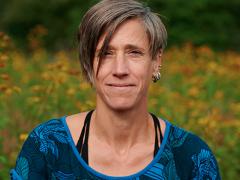
Heike Kuhlmann
MSME, BMC®-Practitioner, dancer, -educator, choreographer, MA Performance Studies/Choreography, Learner of the Discipline of Authentic Movement
Her somatic dance practice focuses on Body-Mind Centering®, Authentic Movement, and Contact Improvisation. In all these methods, Heike is interested in the process of human development. Taking structural conditions into account, Heike aims to support individuals through her work and thereby contribute to creating an environment where people can meet on equal footing. She facilitates somatic processes in individual sessions, courses, workshops, and training programs. Co-founder of the Working Group on Critical Somatics (AKS). Her artistic interests combine dance, activism, and somatics.
More information on: www.heikekuhlmann.net
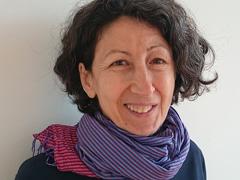
Adalisa Menghini
Teacher, choreographer, performer
Adalisa studied at the S.N.D.O in Amsterdam, after which she completed her M.A. in Neurophysiological Psychology. She is a teacher of the Feldenkrais Method. She works with professional and non-professional dancers, children and seniors. She was nominated twice as best choreographer of the "Giocabriga". In collaboration with K. Wickenhäuser, she has brought performances with school children to museums. Twice they have won the "Kinder zum Olymp!" award. She teaches at the Tanzfabrik, the Somatic Academy Berlin and at the Berlin University of the Arts.
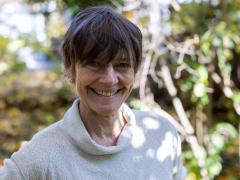
Ka Rustler
Ka Rustler has been performing, researching and analyzing somatic practices and their embodiment in movement, choreography and therapy for over 30 years. BMC® Teacher
Kosten
Costs
Single module
810€
This workshop is the first module of the professional training c.a.r.e - Creativity, Attachment, Resilience, Education. >> more information
Whole professional training C.A.R.E
3680€ + Certification 200€
paying via installments is possible.
Dates
Jul 06-11, 2026 | Monday-Saturday 10:00am - 05:30pm
Curriculum
Module 1 | Jul 06 - Jul 11, 2026 | Embryology
|
Module 2 | Jul 13 - Jul 17, 2026 | Infant movement development
|
Module 3 | Sep 28 - Oct 02, 2026 | Self-Other* - and interaction
|
Module 4 | Jan 04 - Jan 08, 2027 | Embodied Pathways
|
Module 5 | Mar 29 - Apr 02, 2027 | Motivation, Engagement & Vitality
|
Module 6 | May 03 - May 08, 2027 | Embodying Creation
|
Anmeldeinformationen
BerlinSomatische Akademie Berlin
Paul-Lincke-Ufer 30
10999 Berlin | side building
1st backyard
4th floor
- Full Price: 810.00 EUR