
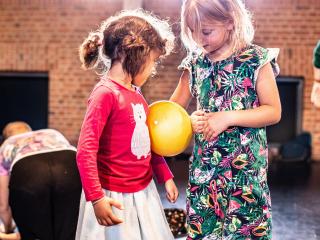
- Embodied Pathways
Module 4
Neuroplasticity in Learning and Movement
This module offers a practical and embodied exploration of the profound interconnection between movement and learning—an interplay that is essential not only in childhood, but also in the lifelong journey of development, healing, and resilience.
Drawing on a range of somatic disciplines, participants will gain a deeper understanding of how learning and development unfolds through the body. Whether applied in education, parenting, therapy, or personal growth, this work illuminates how movement fosters not only cognitive development, but also emotional regulation and nervous system balance—core foundations for learning, connection, and recovery from stress or trauma.
A central focus of this module is understanding how movement and learning are inseparable. Through direct experience of the nervous system and the felt relationship between brain and body, we explore how neural connections and pathways are formed and how they can be gently supported or re-patterned over time.
Participants will also cultivate the ability to observe and analyze movement with sensitivity and insight. This embodied literacy enriches learning environments, deepens play and interaction, and creates supportive conditions for growth across the lifespan.
While especially relevant for those working with children, this approach also offers adults valuable tools to better understand their own patterns, address past difficulties and strengthen their sense of embodiment and self-regulation.
Key Topics of the module:
- Brain and Neuroplasticity through movement
- Understanding the Nervous System
- Interconnectivity
- Lifelong learning through movement
- Movement observation and analysis
- Recognizing compensations and adaptations
- Repatterning habits
- Practice-based tools and contextual applications
- Emotional regulation and nervous system balance
- Embodied Approach to Development
- Case studies
- Trauma
Ausführliche Seminarinformationen
200 UE / 6 modules / 4 somatic methods / 3 instructors
Curriculum
The C.A.R.E training consists of 6 modules and each module can be booked individually. You can join the ongoing modular training at any time.
Some of the modules are recognized as educational leave in Berlin.
Curriculum
Module 1 | tba 2026 | Embryology
|
Module 2 | tba 2027 | Infant movement development
|
Module 3 | tba 2027 | Becoming Self
|
Module 4 | tba 2027 | Embodied Pathways
|
Module 5 | Jan 31 - Feb 04, 2026 | Motivation, Engagement & Vitality
|
Module 6 | Mar 30 - Apr 03, 2026 | Embodying Creation
|
For whom is C.A.R.E?
- Teachers, social workers, youth workers and parents who are looking for new ways to help children and young people grow and develop through physical experience and body awareness.
- Parents who want to better understand how they can promote their children's emotional and physical well-being through movement and mindfulness.
- Anyone who wants to learn how to find and support their own emotional and physical balance.
What are the key educational aspects of the C.A.R.E. program?
- Developmental foundations: C.A.R.E. begins with the observation of how humans develop from the earliest stages (prenatal, infancy, early childhood) and how movement and attachment influence learning. The neurobiological foundations of learning, such as the function of the nervous system and the development of trauma, form the educational cornerstones of the training.
- Learning through experience: Participants learn through embodied experience. Movement-based activities provide a deep understanding of developmental processes, while theoretical information accompanies their own learning and reflection process.
- Learning as a lifelong process: C.A.R.E. is aimed at those who wish to deepen their understanding of learning as an ongoing developmental process - be it in their work with children, adults or for their own personal growth.
Research-based and practice-oriented
Our C.A.R.E. program is based on years of practical experience and integrates proven approaches from various disciplines, such as Somatic Experiencing (SE), Body-Mind Centering®, Neuromotor Development Promotion INPP®, NARM, Feldenkrais and others. These methods are integrated with each other to promote a deep understanding of the connections between body, mind and development. They are based on the latest research and help to regulate the nervous system and understand the effects of trauma and early childhood development without focusing on the traumatic event itself.
Applied somatic methods of training
- IBMT (Integrative Bodywork- and Movement Therapy)
- Neurophysiological Psychology
- Feldenkrais
- Contact Improvisation
- Ideokinesis
- Body-Mind Centering®
- Dance
Graduation Requirements:
- Proof of 10 hours observation.
- One class presentation
- Case study or practical research, documented in an essay of maximum 3,000
General content:
Embryology- Tone
- Development of the vestibular system
- Reflexes
- Primitive reflexes
- Postural reflexes
- Human Movement Development
- Brain development
- development of the nervous system
- information processing
- physiological learning processes
- new versus re-learning
- creating a supportive space for learning
- dealing with resistance
- achievement evaluation
- age-appropriate mediation
- teenagers
- 8-11 (development of sexuality)
- 3-7/8 (Postural reflexes should be integrated)
- 0-3
- Games: Movement activities / Support / Touch
- Touch: as support not as correction /alternatives to touch
Subjects:
- Experiential Anatomy
- A variety of Somatic methods
- Context / practical application / practice fields
- Integration
- Hands on
- Case study discussions
Seminarleiter*innen
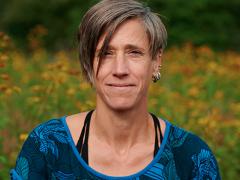
Heike Kuhlmann
www.heikekuhlmann.net
MSME, BMC®-Practitioner, dancer, -educator, choreographer, MA Performance Studies/Choreography
Heike is interested in the unfolding process of human beings. It is more than the individual unfolding, but in how people can meet each other at eye level through personal development and inclusion of structural conditions in her somatic facilitations. Being a condition to become Critical Somatics. She accompanies somatic processes in individual sessions, courses, workshops and trainings. Activism and somatics are interwoven in her artistic work. More information on: www.somatik-tanz-choreographie.de, www.heikekuhlmann.net
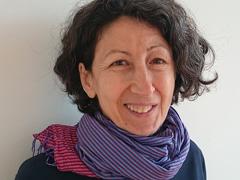
Adalisa Menghini
Teacher, choreographer, performer
Adalisa studied at the S.N.D.O in Amsterdam, after which she completed her M.A. in Neurophysiological Psychology. She is a teacher of the Feldenkrais Method. She works with professional and non-professional dancers, children and seniors. She was nominated twice as best choreographer of the "Giocabriga". In collaboration with K. Wickenhäuser, she has brought performances with school children to museums. Twice they have won the "Kinder zum Olymp!" award. She teaches at the Tanzfabrik, the Somatic Academy Berlin and at the Berlin University of the Arts.
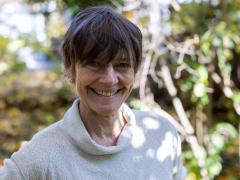
Ka Rustler
Ka Rustler has been performing, researching and analyzing somatic practices and their embodiment in movement, choreography and therapy for over 30 years. BMC® Teacher
Kosten
Anmeldeinformationen
BerlinSomatische Akademie Berlin
Paul-Lincke-Ufer 30
10999 Berlin | side building
1st backyard
4th floor
- Full Price: 690.00 EUR
This module is part of the professional training c.a.r.e. It is seperatly bookable as well:
Embodied Pathways
DE+EN | 5-day workshop c.a.r.e
tba 2028
>> more info
